Would you like to switch to the accessible version of this site?

Go to accessible site Close modal window

Don't need the accessible version of this site?

Hide the accessibility button Close modal window
Accessibility View Close toolbar

(903)-474-9090

No social media links found. Please configure it

Emory Eyecare

Your Hometown Eyecare Provider

Menu
  • Home
  • Who We Are
    • Emory Eyecare Patient Center
      • Insurance and Payments
      • Notice of Privacy Practices
      • Online Forms
    • Meet Dr. Ketchum
  • What We Do
    • Contact Lens Exams
    • Eye and Vision Exams
    • Lasik Eye Surgery
    • Hard to Fit Contacts
    • Vision Therapy FAQ
    • Sports Vision
    • Sunglasses
  • Frames
  • What People Are Saying
  • Connect With Us
  • Blog
  • Community Content
    • Common Eye Conditions
      • Age-Related
      • Cognitive and Acquired
      • Vision Impairment
      • Injury & Irritation
      • Eye Lids
      • Changes in Appearance
    • Contact Lenses
    • Eye Diseases
    • Eyeglasses
      • Eyeglass Lenses
    • Eye Symptoms
    • How the Eyes Work
      • Basic Visual Skills
    • Pediatric Vision
    • Protecting Your Eyes
    • Visual Rehabilitation
    • Vision Problems
    • What is Vision Therapy
    • Vision Therapy Programs
    • We Can Help With
      • Cataracts
      • Corneal Disorders
        • Disorders
      • Glaucoma
      • Refractive Disorders
      • Adult Strabismus
      • Retinal Disorders
    • Newsletters
      • Glasses & Frames
      • Contacts
      • Tips for Healthy Eyes
      • Conditions That Affect Vision
      • Kid's Vision
      • Amazing, Interesting Eyes
      • Medical Perspectives
  • Home >
  • Articles >
  • Eye Symptoms >
  • Ptosis

Ptosis

  • Created in Eye Symptoms

Ptosis

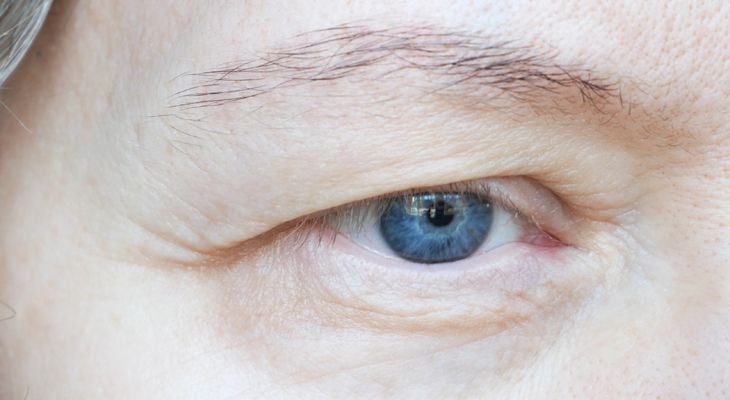
Ptosis (TOE-sis) refers to an upper eyelid that droops and can occur in children or adults. The droop may be hardly visible, or it could cover the entire pupil. Depending on the severity of the droop, it could interfere with vision. People with ptosis may try to lift the eyelids or tilt their heads back to see more clearly.

Causes of Ptosis

Most commonly, ptosis develops as part of the aging process, as the muscle tendon stretches or becomes separated from the eyelid. The tendon can also be affected by trauma, cataract surgery, or other corrective eye surgery. In some cases, a baby may be born with ptosis (congenital ptosis). A droopy eyelid can also be caused by a neurological disorder, an eye tumor, or a systemic disease such as diabetes.

Diagnosis and Treatment

Your eye care professional will examine your eyelids carefully by taking detailed measurements of the height of your eyelids. He or she will also assess the strength of your eyelid muscles.

For childhood ptosis, surgery may be required to improve vision and cosmetic appearance while preventing or reducing future vision problems. The surgical procedure involves tightening the muscle that lifts the affected eyelid. In cases of severe ptosis with a very weak muscle, the doctor can attach or suspend the eyelid from under the eyebrow so that the forehead muscles lift the eyelid.

In adults, ptosis treatment usually needs surgery. In milder cases, creating a small tuck in the lifting muscle and removing excess eyelid skin is sufficient to raise the lid. However, more severe ptosis requires reattaching and strengthening the muscle.

  • Common Eye Conditions
    • Age-Related
    • Cognitive and Acquired
    • Vision Impairment
    • Injury & Irritation
    • Eye Lids
    • Changes in Appearance
  • Contact Lenses
  • Eye Diseases
  • Eyeglasses
    • Eyeglass Lenses
  • Eye Symptoms
  • How the Eyes Work
    • Basic Visual Skills
  • Pediatric Vision
  • Protecting Your Eyes
  • Visual Rehabilitation
  • Vision Problems
  • What is Vision Therapy
  • Vision Therapy Programs
  • We Can Help With
    • Cataracts
    • Corneal Disorders
      • Disorders
    • Glaucoma
    • Refractive Disorders
    • Adult Strabismus
    • Retinal Disorders
  • Newsletters
    • Glasses & Frames
    • Contacts
    • Tips for Healthy Eyes
    • Conditions That Affect Vision
    • Kid's Vision
    • Amazing, Interesting Eyes
    • Medical Perspectives

Newsletter Signup

Sign up for more articles

Error!

    Location

    Find us on the map

    Hours of Operation

    Our Regular Schedule

    Emory Eyecare

    Monday:

    8:00 am-5:00 pm

    Tuesday:

    8:00 am-5:00 pm

    Wednesday:

    8:00 am-5:00 pm

    Thursday:

    8:00 am-5:00 pm

    Friday:

    8:00 am-4:00 pm

    Saturday:

    Closed

    Sunday:

    Closed

    No social media links found. Please configure it
    • Copyright © 2026 MH Sub I, LLC dba iMatrix.
    • Admin Log In
    • Site Map